
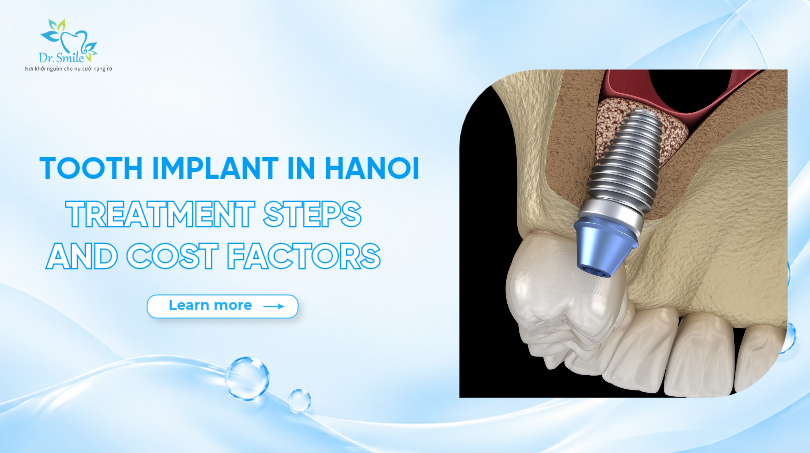
Tooth implant treatment is a modern solution for restoring missing teeth, helping patients regain chewing function and a confident smile. Beyond aesthetic improvements, dental implants can also help preserve jawbone structure and support long-term oral health. If you are considering a tooth implant in Hanoi, understanding the treatment process, suitability and cost factors is essential. This guide explores what you need to know about dental implant treatment and the available options at Dr.Smile.
What Is a Tooth Implant and How Does It Work?
A tooth implant, also known as dental implant treatment, is a restorative dental procedure that involves placing an implant post made of titanium or other biocompatible materials into the jawbone to replace the root of a missing natural tooth. Once the tooth implant has successfully integrated with the jawbone, the dentist attaches an abutment and a dental crown to restore the appearance, function and aesthetics of the missing tooth.
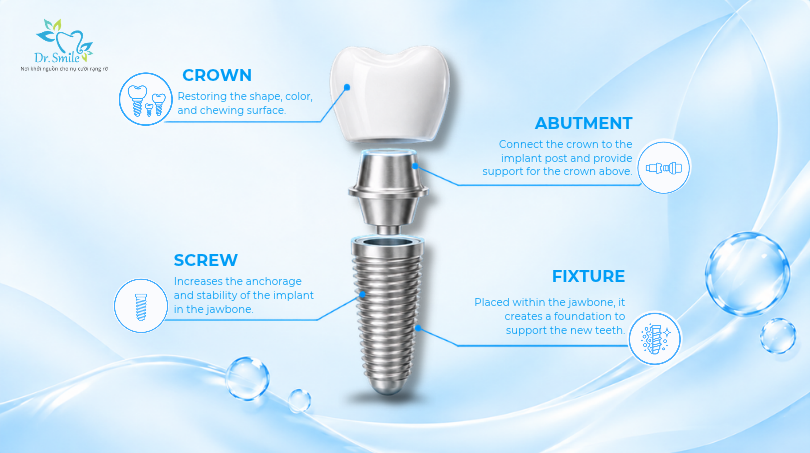
A tooth implant consists of three main components:
- Implant Post: Placed into the jawbone, the implant post acts as an artificial tooth root and provides a stable foundation for the restoration.
- Abutment: This connector links the implant post to the dental crown, helping transfer chewing forces and support the artificial tooth.
- Dental Crown: The visible part of the tooth implant is designed to replicate the shape, color and function of a natural tooth.
The way a tooth implant works is based on a biological process known as osseointegration, in which bone tissue grows and bonds directly with the implant surface. This process provides the tooth implant with a high level of stability during chewing. Unlike traditional dental bridges, tooth implant treatment does not require the adjacent teeth to be reshaped for support. Additionally, dental implants can help minimize jawbone resorption at the site of tooth loss by transmitting chewing forces to the surrounding bone.
Who Is a Suitable Candidate for Tooth Implant Treatment?
Tooth implant treatment may be suitable for adults who have lost one, several or all of their teeth in a jaw. However, eligibility for a tooth implant depends on the patient’s overall health, jawbone density and volume, as well as the condition of the periodontal tissues.
A person may generally be considered a suitable candidate for tooth implant treatment if they meet the following criteria:
- Sufficient Jawbone Volume: The jawbone has adequate height and width to support the implant post or bone grafting can be performed if necessary.
- Healthy Gums and Periodontal Tissues: The gums and surrounding tissues are healthy, with no uncontrolled periodontal disease.
- Stable General Health: The patient is in good overall health and can adequately undergo the surgical procedure and healing process.
- Good Oral Hygiene Habits: The patient maintains proper oral hygiene and is willing to attend regular follow-up appointments.
Certain factors, such as uncontrolled diabetes, smoking, a history of radiation therapy to the head and neck region or the use of medications that affect bone metabolism, may increase the risk of complications and interfere with the osseointegration process. Patients with these conditions should undergo a thorough clinical assessment by a dentist before proceeding with tooth implant treatment to determine their suitability and develop an appropriate treatment plan.
What Are the Steps Involved in Getting a Tooth Implant in Hanoi?
The tooth implant process in Hanoi involves several stages to ensure proper implant placement, stable integration with the jawbone and optimal restoration results. At Dr.Smile, each treatment plan is tailored to the patient’s specific oral health condition.
Step 1 – Initial Consultation and Dental Examination
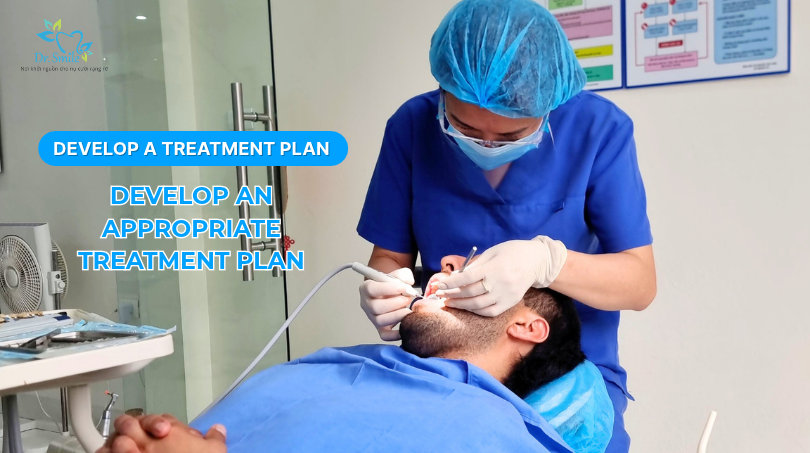
The first step is a consultation and comprehensive dental examination. The dentist evaluates the missing tooth, remaining teeth, gum tissues, bite alignment and overall health to determine the patient’s restorative needs.
Patients should provide information about their medical history, current medications and relevant health conditions. The dentist also assesses risk factors such as periodontal disease, smoking and bruxism (teeth grinding).
Step 2 – Diagnostic Imaging and Personalized Treatment Planning
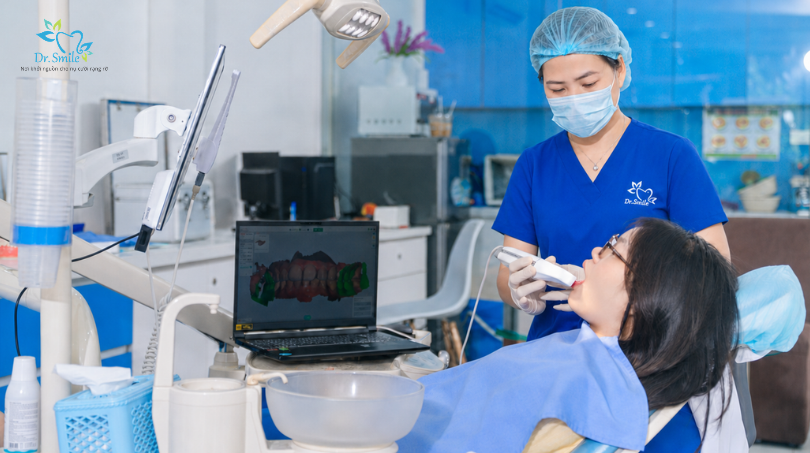
Following the examination, the dentist may recommend cone-beam computed tomography to assess the jawbone structure and important anatomical areas, such as the inferior alveolar nerve and maxillary sinus.
These images help determine the bone height, width and density at the implant site, providing a basis for selecting the appropriate implant size, placement angle and restoration method.
If bone volume is insufficient, additional procedures such as bone grafting or sinus lifting may be considered. The personalized tooth implant treatment plan also outlines the number of implants, estimated treatment duration, crown type and associated costs.
Step 3 – Surgical Placement of the Dental Implant
Implant placement is a crucial stage of the restoration process. After administering local anesthesia, the dentist prepares the implant site in the jawbone and places the implant post according to the treatment plan.
Accurate positioning, angulation and depth are essential for successful osseointegration and long-term restoration outcomes. Depending on the clinical condition, the dentist may use a flap or flapless surgical technique.
After placement, the surgical site is treated and closed when necessary. Patients receive instructions on postoperative care, swelling and pain management and prescribed medications. In carefully selected cases, a temporary tooth may be provided for aesthetic purposes, although immediate provisional restoration is not suitable for everyone.
Step 4 – Healing and Osseointegration
After surgery, the tooth implant requires time to integrate with the jawbone through a biological process known as osseointegration. This stage is essential for achieving long-term implant stability before the final crown is placed.
Healing typically takes several months, commonly around 2–6 months, depending on bone quality, implant location, overall health and whether bone grafting is required. During this period, patients should avoid excessive chewing forces on the implant site and maintain proper oral hygiene.
The dentist monitors healing through follow-up appointments to assess soft tissue condition, implant stability and readiness for the restoration stage. Following postoperative instructions can help reduce the risk of complications.
Step 5 – Abutment Placement and Final Crown Restoration
Once the tooth implant has successfully integrated with the jawbone, the dentist places the abutment and restores the implant with a dental crown. Depending on the treatment technique, the abutment may be placed during implant surgery or in a separate procedure after healing.
The dentist takes dental impressions or uses digital scanning to record the implant position and design the crown. The final restoration is crafted to match the shape, color, gum contours and bite alignment of the surrounding teeth.
After placement, the dentist checks the crown’s fit, chewing function and occlusal contacts. Proper adjustments help prevent excessive forces on the implant and ensure patient comfort.

Step 6 – Follow-Up Appointments and Implant Maintenance
Tooth implant treatment does not end after the crown is placed. Regular follow-up appointments are necessary to assess the health of the peri-implant tissues, bite alignment and restoration stability.
Home care includes brushing at least twice daily, cleaning between teeth with dental floss or suitable interdental brushes and using specialized cleaning tools when necessary. Patients should avoid smoking, refrain from chewing excessively hard objects and maintain a balanced diet.
Regular check-ups help detect early signs of peri-implantitis, a condition that can cause supporting tissue loss and compromise implant longevity if left untreated. The dentist determines the appropriate follow-up schedule based on each patient’s oral health and risk factors.
How Much Does a Tooth Implant Cost in Hanoi?
The cost of a tooth implant in Hanoi can vary significantly depending on the dental clinic and the patient’s individual treatment needs. The overall price is influenced not only by the implant post but also by the restorative components, additional procedures and post-treatment care.
At Dr.Smile in Hanoi, tooth implant costs vary depending on the implant brand and country of origin. The clinic offers the following options:
- Korean Implant (Dentium, Neo Biotech): Starting from 700 USD per unit.
- USA Implant (Dentium SuperLine): Starting from 1,000 USD per unit.
- French Implant (ETK Active): Starting from 1,000 USD per unit.
- Swiss Implant (Neodent): Starting from 1,135 USD per unit.
- Swiss Implant (Straumann): Starting from 1,500–1,900 USD per unit.
Tooth Implant Consultation at Dr.Smile in Hanoi
If you are considering tooth implant treatment to restore missing teeth, choosing a dental clinic that provides thorough examinations and personalized treatment plans is essential. At Dr.Smile in Hanoi, patients can receive consultations, implant suitability assessments and restorative options tailored to their individual needs.
An implant consultation helps patients understand the number of implants required, potential additional procedures, estimated treatment duration and factors affecting the overall cost. Consulting directly with a dentist also allows patients to prepare for the procedure, recovery process and postoperative care.
To determine whether a tooth implant is suitable for your dental condition, contact Dr.Smile in Hanoi for a comprehensive examination and personalized treatment plan. Restoring missing teeth can improve chewing function, enhance smile aesthetics and contribute to long-term oral health.

Restoring a missing tooth is an important step toward better oral health and a more confident smile. With proper planning, professional care and regular maintenance, a tooth implant can provide a durable and functional replacement for natural teeth. Understanding the treatment process and associated costs also helps patients make informed decisions. Contact Dr.Smile in Hanoi today to explore your tooth implant options and receive a treatment plan tailored to your needs.
DR.SMILE DENTAL CLINIC
Address: No. 41 Nui Truc Street, Giang Vo Ward, Hanoi City, Vietnam
Hotline: 0966692286
Email: drsmile.vn@gmail.com
Facebook: facebook.com/www.Dr.Smile
Website: drsmiledentalcare.com
Instagram: instagram.com/drsmilevn