
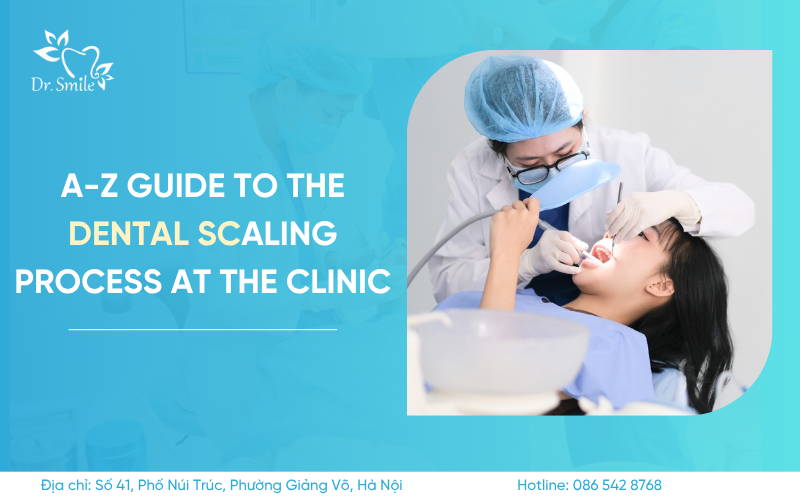
Dental calculus, also known as tartar, is hardened plaque that adheres firmly to the tooth surface. It can also form above or below the gumline and may irritate the gum tissue. Dental scaling is the procedure of removing these hardened deposits around the tooth neck and is recommended by dentists every 6 months.
When do you need dental scaling?
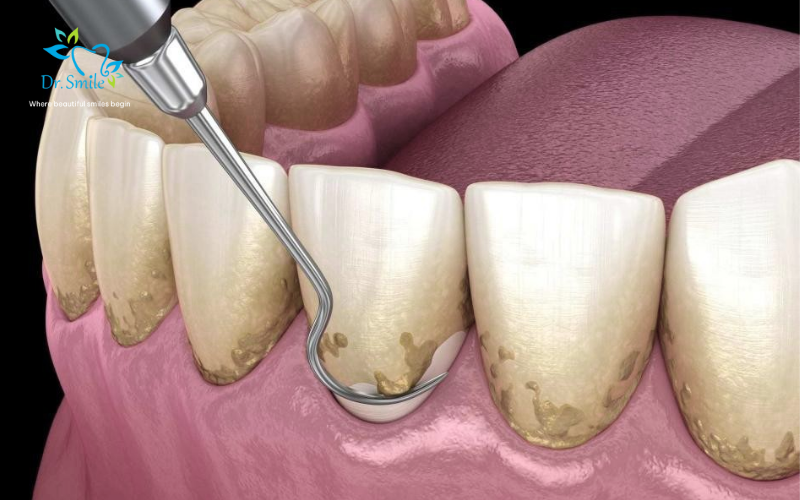
Dental scaling helps prevent gum inflammation, especially in cases such as:
- Excessive plaque and tartar
- Red, swollen or occasionally painful gums
- Frequent gum bleeding
- Chronic gingivitis
The average dental scaling session takes about 30 minutes.
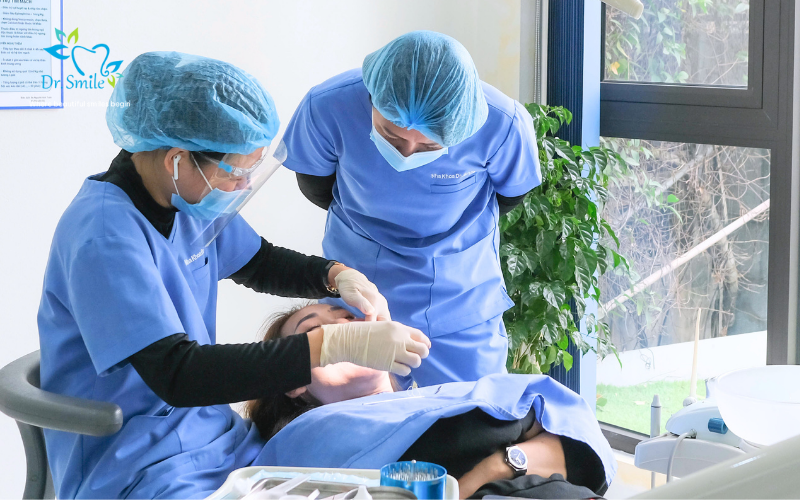
Dental scaling procedure at Dr.Smile Dentistry

Step 1: Examination and consultation
Before any treatment, the dentist performs a thorough oral check-up to assess your dental health. If problems are detected, appropriate corrective steps will be advised before performing scaling.
Step 2: Oral cleaning
To expose tartar and ensure a sterile environment, the dentist cleans the oral cavity using specialized medical solutions.
Step 3: Dental scaling
This is the most important step of the procedure. The dentist uses professional instruments to scrape and remove hardened plaque. This technique requires precision and careful handling to avoid damaging enamel or causing gum bleeding.
Step 4: Tooth polishing
After tartar is fully removed, the dentist polishes the tooth surfaces. This step smooths and brightens the teeth, while helping prevent future plaque buildup after scaling.
Dental scaling helps prevent oral diseases
Periodontal disease is a chronic infection of the gums and supporting tissues of the teeth. Common symptoms include red, swollen gums, bleeding, pus discharge, bone loss, tooth mobility and eventual tooth loss.
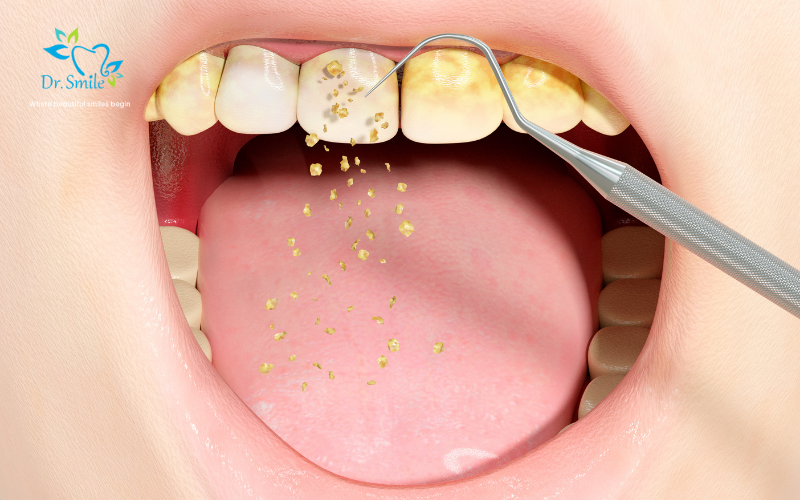
The main cause of periodontal disease is poor oral hygiene, which allows food debris and plaque to accumulate around the tooth neck and between teeth. Over time, plaque hardens into tartar, triggering inflammation. Without proper oral care, this develops into gingivitis and later periodontal disease. The condition progresses quickly in individuals with weak immunity.
Signs of periodontal disease include:
- Bleeding gums when brushing
- Swollen, easily bleeding gums
- Tartar deposits around the tooth neck
- Persistent bad breath
- Pus discharge when pressing on the gums
- Discomfort when chewing
- Loose teeth
- Teeth shifting or becoming spaced out
If untreated, bone loss around the teeth occurs, eventually leading to tooth loss even when the tooth itself is not decayed. Depending on severity, periodontal treatment may require 1 week, with 2-3 visits for medication and follow-up care.
With the information above, we hope you now have a better understanding of oral care and how dental scaling helps protect your gum health. If you have any concerns, feel free to contact the dentists at Dr.Smile for 24/7 consultation and support.