
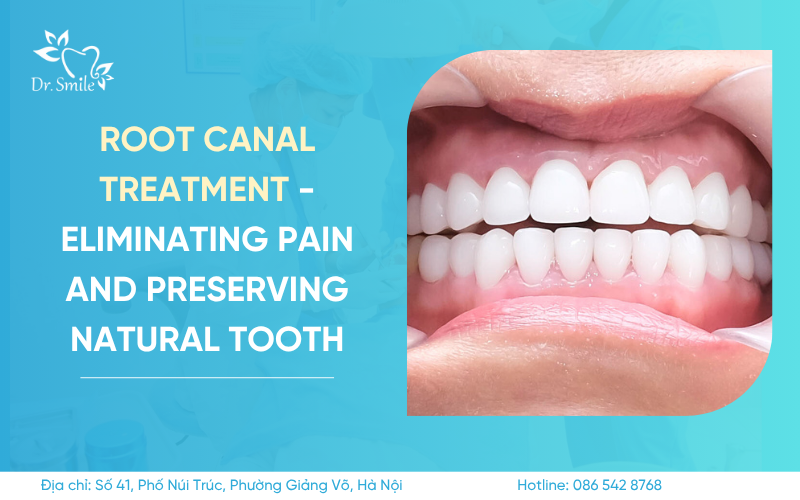
Severe toothache that leads to fever or makes it impossible to concentrate is often a sign that you need root canal treatment. At this stage, infection inside the tooth pulp may be progressing quickly. The treatment helps eliminate pain, restore chewing function and preserve your natural tooth, a procedure that should not be delayed.
What is dental pulp?
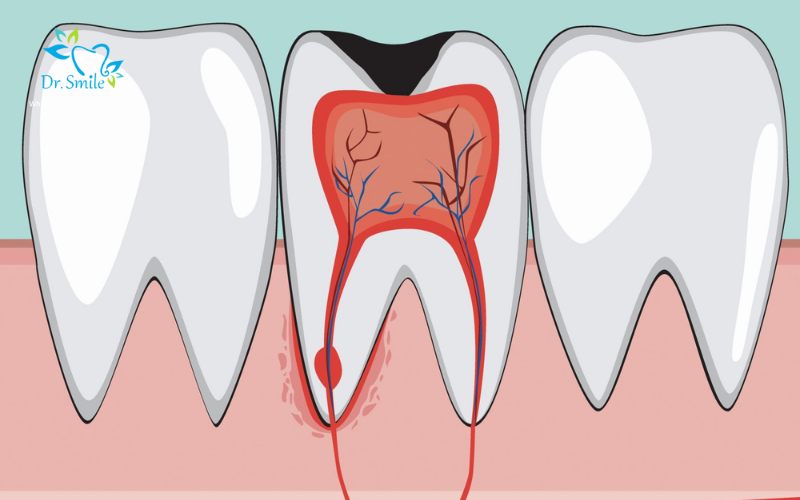
Every tooth contains a system of nerves and blood vessels known as the dental pulp. This pulp nourishes the tooth and transmits sensory signals. When bacteria reach the pulp, endodontic treatment becomes necessary to save the tooth. Pulp structure varies by tooth type and age: upper incisors usually have one canal, while upper molars often have three or four. In older patients, calcification makes root canal treatment more complex.
When is root canal treatment needed?
The dental pulp can become irreversibly damaged due to:
- Bacterial invasion from tooth decay or gum disease
- Trauma such as mechanical impact or temperature shock
- Complex canal anatomy requiring professionaltreatment
When pain becomes persistent and intense, endodontic treatment is the only method to stop the infection and protect the tooth.
Root canal treatment procedure

Step 1: Examination and diagnosis
At Dr.Smile, every patient undergoes full-mouth X-rays to determine whether endodontic treatment is required. If the pulp is suspected to be inflamed, an additional localized X-ray is taken to evaluate the severity and complexity of the canals. This helps the dentist plan your root canal treatment accurately, including timeline and cost.
Step 2: Local anesthesia
Depending on the tooth’s condition, anesthesia may or may not be needed during root canal treatment. If the pulp is already necrotic, the tooth may no longer feel pain. The goal is to ensure comfort throughout the endodontic treatment process.
Step 3: Rubber dam isolation
A rubber dam is used to isolate the tooth during endodontic treatment, ensuring a dry and bacteria-free environment. This enhances safety, prevents instruments from entering the airway and avoids discomfort from irrigating solutions.
Step 4: Access opening, cleaning and shaping
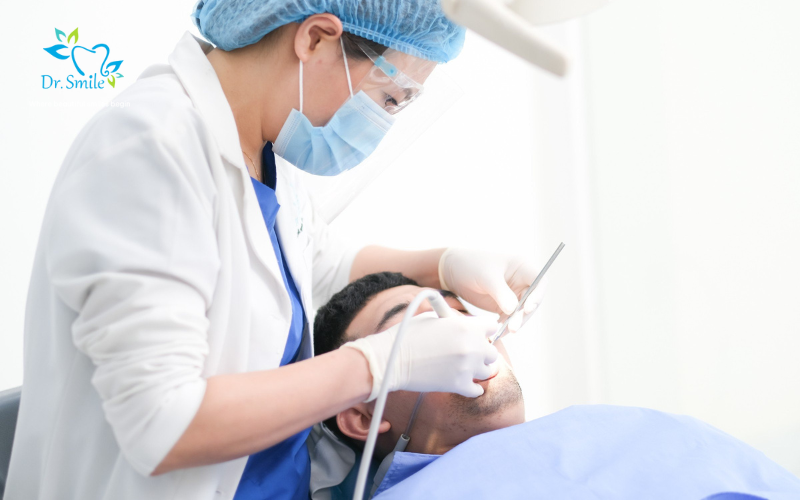
The dentist creates an access opening to reach the pulp chamber. Proper access is crucial for successful root canal treatment because it allows thorough cleaning of infected tissue. Specialized files are used to remove pulp, shape the canals and irrigate them multiple times for optimal disinfection.
During endodontic treatment, X-ray measurements or an apex locator ensure that all canals are cleaned to full length, preventing bacteria from remaining inside.
Step 5: Temporary filling between visits
Depending on the condition, root canal treatment may be completed in one or several appointments. Between visits, the tooth is temporarily filled to keep out food and bacteria.
Step 6: Canal Filling (Obturation)
This is the final step of endodontic treatment. After the canals are clean and symptoms have resolved, the dentist fills them with biocompatible materials to seal the system completely. X-rays are taken afterward to verify the quality of the root canal treatment result.
Treatment may require one or multiple sessions. After completion, the tooth may need a filling or a dental crown depending on how much structure has been lost. A properly restored tooth after endodontic treatment can last a lifetime with good care.
Common questions about root canal treatment
Does endodontic treatment hurt?
With modern technology at Dr.Smile, endodontic treatment is painless. Advanced anesthesia minimizes discomfort during the procedure.
How long does treatment take?
Some cases can be completed in one appointment, while others require multiple visits depending on the complexity of the canals.
Do I need a crown after root canal treatment?
Yes. After endodontic treatment, the tooth becomes more brittle and risks cracking. A crown strengthens and protects it.
How long does a treated tooth last?
With proper maintenance, a tooth that has undergone endodontic treatment can remain functional for life.
Can I eat normally after root canal?
You can eat normally but should avoid excessively hard, chewy, hot or cold foods immediately after endodontic treatment.

These insights are provided by experienced specialists at Dr.Smile, who have handled thousands of root canal treatment cases. If you are experiencing tooth pain or suspect pulp inflammation, contact Dr.Smile for a free consultation and receive expert treatment advice.