
For patients considering cosmetic dentistry in Vietnam, porcelain veneers shade selection Hanoi is an opportunity to create a smile that looks bright, balanced, and natural rather than artificial. At Dr. Smile, shade planning should be approached as an individualized process that considers both aesthetic expectations and the characteristics of each patient’s teeth.
Understanding how dentists evaluate color, compare shade samples, and plan the final result can help you make informed decisions before beginning treatment. Whether you prefer a subtle enhancement or a noticeably brighter smile, the right shade should reflect your goals while maintaining visual harmony.
Why does shade selection matter for porcelain veneers?
Porcelain veneers are thin restorations bonded to the front surfaces of teeth to improve their appearance. They can address discoloration, minor shape irregularities, gaps, and other cosmetic concerns. However, even well-designed veneers may look unnatural if their color does not suit the patient.
>>See more: What is cosmetic porcelain crown treatment?
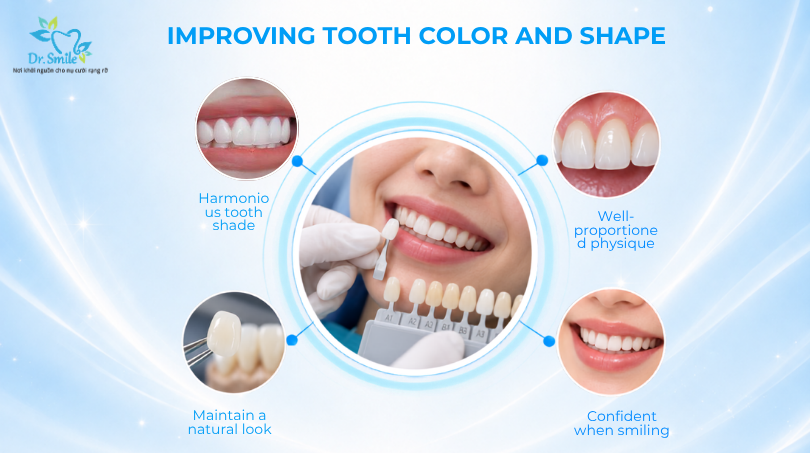
This is why porcelain veneers shade selection Hanoi deserves careful attention during the smile design process. Color influences how the teeth relate to the lips, gums, complexion, and surrounding facial features. A shade that looks attractive in a photograph may appear too bright in natural daylight or under different indoor lighting.
Several considerations explain why shade selection matters:
- Natural appearance: Teeth generally contain subtle variations in color and translucency. Selecting a suitable shade helps veneers blend into the smile instead of looking like identical white tiles.
- Facial harmony: The ideal shade should complement the patient’s overall appearance rather than compete with their complexion or lip color.
- Personal confidence: Some patients want a discreet improvement, while others prefer a brighter, more noticeable transformation. Understanding these preferences helps establish realistic expectations.
- Consistency across the smile: When several veneers are placed together, their color should look balanced while preserving natural-looking characteristics.
Modern cosmetic dentistry increasingly emphasizes personalized results over one-size-fits-all beauty standards. Patients often arrive with inspiration photos from social media, but those images may feature professional lighting, digital filters, or extensive cosmetic treatment.
At Dr. Smile in Hanoi, discussing these references can help clarify the desired outcome. Nevertheless, the final shade should be selected according to the patient’s actual dental condition and the characteristics of the planned restorations.
How is the ideal veneer shade determined?
The process of porcelain veneers shade selection Hanoi involves more than choosing a color from a chart. Dentists evaluate the existing teeth, discuss aesthetic preferences, and consider how the porcelain will interact with the underlying tooth structure.
Examining the natural teeth
The dentist first assesses the current color of the teeth, including differences between individual teeth. Natural enamel is not completely uniform. The edges may appear more translucent, while the areas closer to the gums may have a slightly different color.
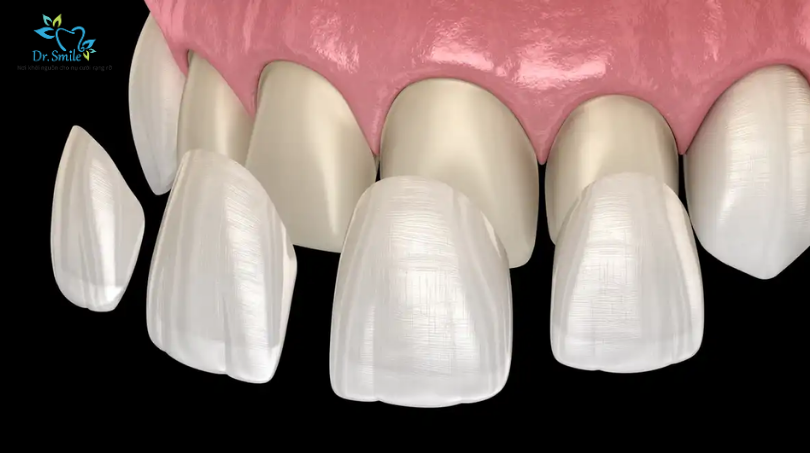
Existing restorations, discoloration, and previous dental treatments may also influence the planning process. These details help the dental team determine how closely the veneers can match neighboring teeth and whether additional preparation is needed.
Comparing professional shade guides
A dental shade guide provides standardized samples that help dentists compare possible colors with the patient’s natural teeth. The comparison is generally made under appropriate lighting, with attention to brightness, hue, and saturation.
Patients may be invited to review several options and explain which appearance feels most comfortable. Rather than selecting the brightest sample automatically, the dentist considers which option will create a harmonious result.
Assessing translucency and surface characteristics
Color is only one part of the final appearance. Porcelain also interacts with light through translucency, surface texture, and the way it reflects its surroundings.
A veneer that is too opaque may look flat, whereas carefully designed translucency can create a more lifelike effect. The ceramic material, restoration thickness, and underlying tooth color all influence the final outcome.
Reviewing the proposed smile design
For multiple veneers, the dentist considers how the selected shade will look across the entire smile. Photographs, digital planning, and mock-ups may be useful when available and clinically appropriate.
During porcelain veneers shade selection Hanoi, patients should ask how the proposed shade is expected to look in everyday conditions, not only under bright dental lighting. A detailed consultation helps align personal preferences with the technical requirements of the restoration.
What factors influence your final shade choice?
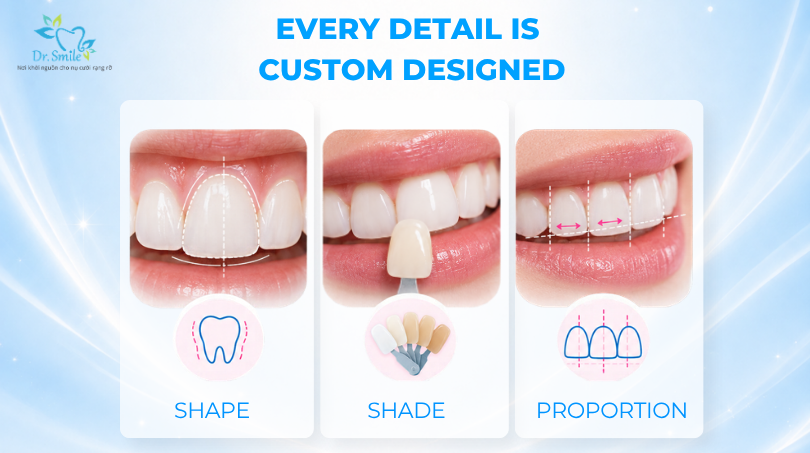
There is no single veneer shade that suits everyone. The final decision depends on several interconnected factors, including natural tooth color, skin tone, age-related characteristics, and the number of teeth being treated.
Your natural teeth
If only one or two veneers are planned, matching the adjacent teeth may be a priority. If the treatment involves most of the visible upper teeth, there may be greater flexibility to create a brighter and more uniform appearance.
Patients with dark underlying discoloration should discuss how this may affect the result. Porcelain can mask certain color differences, but the degree of masking depends on the material, thickness, preparation, and available space.
Your complexion and facial features
Skin tone can influence how a particular shade is perceived. A very bright veneer shade may create a striking contrast, while a softer shade may appear more understated.
However, complexion should be a guide rather than a strict rule. Personal taste, lip color, facial proportions, and the overall smile design are equally relevant. The best choice is one that looks balanced and reflects the patient’s preferences.
Your desired aesthetic
Some patients prefer a natural smile with gentle color variations. Others want a polished, high-brightness appearance inspired by celebrity smiles.
Before treatment, communicate your expectations clearly. Reference photographs can help explain your preferences, but the dentist should discuss which aspects are realistic for your individual circumstances.
The porcelain material and laboratory process
Different ceramic materials have different optical properties. The choice of material, its translucency, and the dental laboratory’s ability to reproduce fine details can affect the appearance of the completed veneers.
This is another reason porcelain veneers shade selection Hanoi should involve collaboration between the dentist and dental laboratory. Clear shade documentation and communication can help reduce discrepancies between the planned and final result.
Lighting and the surrounding environment
Colors can appear different under daylight, warm indoor lighting, and cool artificial light. This phenomenon is particularly important when evaluating bright cosmetic restorations.
Shade assessment should therefore be performed under suitable conditions. When possible, patients should also review the proposed result through photographs or other available planning methods, understanding that these tools cannot perfectly reproduce every real-world lighting condition.
Can the veneer shade be adjusted after placement?
One common concern among cosmetic dentistry patients is whether they can change the color if the veneers look too white, too dark, or different from what they expected.
The answer depends on the stage of treatment and the type of adjustment required. Porcelain veneers shade selection Hanoi is best completed before permanent bonding because porcelain restorations cannot be whitened in the same way as natural teeth.
Professional whitening products may lighten natural enamel, but they do not reliably change the intrinsic color of porcelain veneers. This distinction is important for patients considering whitening and veneers as part of the same smile makeover.
Before permanent placement, potential changes may be possible depending on the treatment stage. The dentist may be able to request adjustments from the laboratory, review alternative shade options, or reassess the proposed design before final bonding.
After placement, the available options are more limited:
- Professional assessment: The dentist can determine whether the concern relates to the veneer shade, surrounding teeth, lighting, or the overall smile design.
- Polishing or surface maintenance: Appropriate professional care may improve surface appearance when staining or surface irregularities are involved, but it will not fundamentally change the porcelain’s underlying shade.
- Replacement or remaking: If the color is significantly different from the agreed result, replacing the restoration may be necessary. This involves additional cost, time, and clinical considerations.
Patients should avoid attempting to alter veneers with abrasive products or unapproved whitening treatments. These methods may damage the restoration or surrounding teeth without achieving the desired color.
The most effective strategy is to communicate concerns before the veneers are permanently bonded. Reviewing expectations early can help minimize unnecessary adjustments and support a more predictable result.
Personalized shade consultation at Dr. Smile in Hanoi
For patients exploring cosmetic dentistry in Vietnam, porcelain veneers shade selection Hanoi should be a collaborative process rather than a decision made from a shade chart alone. The goal is to balance the patient’s aesthetic preferences with sound clinical planning and the natural characteristics of their smile.

At Dr. Smile in Hanoi, patients can discuss their concerns about discoloration, uneven tooth color, and the appearance they hope to achieve through porcelain veneers. A consultation provides an opportunity to evaluate the existing teeth, discuss suitable treatment options, and understand the factors that may influence the final shade.
Before attending an appointment, consider preparing a few questions:
- Which veneer shades would complement my natural teeth and facial features?
- Can I achieve a brighter smile without making my veneers look artificial?
- How will the selected porcelain material affect color and translucency?
- Can I review the proposed shade before permanent bonding?
- Will neighboring natural teeth need whitening before veneer placement?
These questions help turn a general cosmetic goal into a more practical treatment discussion. Patients should also ask about the limitations of shade matching, the expected treatment timeline, maintenance requirements, and the potential need for future replacement.
A reputable dental clinic should explain the available options clearly, avoid promising identical results to inspiration photographs, and encourage informed decisions before irreversible procedures are performed.
Ultimately, successful porcelain veneers shade selection Hanoi is not simply about choosing white teeth. It is about finding a shade that suits the individual, complements the smile, and remains attractive in everyday settings.
With careful planning, clear communication, and personalized professional guidance, patients can approach their veneer treatment with greater confidence and a clearer understanding of the results they can reasonably expect. Dr. Smile offers a starting point for discussing your cosmetic dentistry goals in Hanoi and exploring a veneer plan tailored to your needs.
DR.SMILE DENTAL CLINIC
Address: No. 41 Nui Truc Street, Giang Vo Ward, Hanoi City, Vietnam
Hotline:0966692286
Email: drsmile.vn@gmail.com
Facebook: facebook.com/www.Dr.Smile
Website: drsmiledentalcare.com
Instagram: instagram.com/drsmilevn