
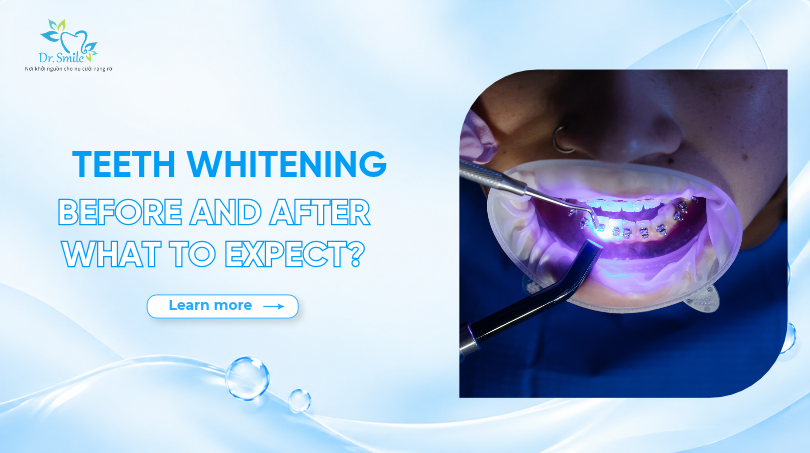
Wondering what a brighter smile can look like after professional whitening? Teeth whitening before and after results can help you understand the potential improvements in tooth color and what to expect from treatment. This article explores the whitening process, factors affecting results and how Dr.Smile in Hanoi can help you achieve a brighter, more confident smile.
What Does Teeth Whitening Before and After Really Look Like?
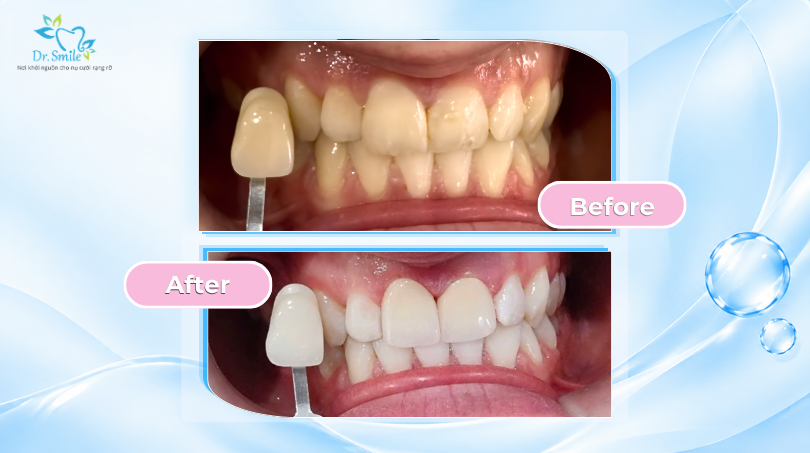
A bright, white smile can make a significant difference in appearance and confidence. Therefore, teeth whitening before and after results are of great interest to those looking to improve their tooth color. Professional teeth whitening can visibly transform yellow or stained teeth into a brighter smile when performed correctly.
However, whitening results depend on natural tooth color, the cause of discoloration, enamel thickness and oral health. While some patients experience noticeable improvements, others with deeper stains may require further evaluation.
Teeth whitening is a cosmetic dental treatment that uses oxidizing agents to break down stains within tooth structures. When performed under professional supervision, it can enhance natural tooth color without removing healthy tooth tissue. Ultimately, the goal of teeth whitening is not to achieve an unnaturally white shade but to create a brighter, more harmonious smile that complements each patient’s natural teeth.
How Does Professional Teeth Whitening Work?
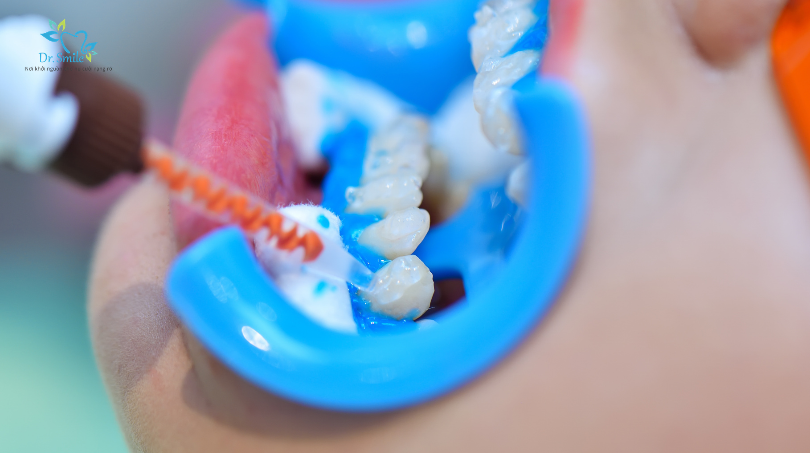
Professional teeth whitening works through an oxidation reaction that targets the pigment molecules responsible for staining within the tooth enamel and dentin. This procedure typically utilizes hydrogen peroxide or carbamide peroxide, with the concentration and duration of exposure adjusted according to the specific condition of each patient’s teeth.
The Role of Hydrogen Peroxide and Carbamide Peroxide
Hydrogen peroxide and carbamide peroxide are two common active ingredients in professional teeth whitening treatments. Although both aim to improve tooth color, they differ in how they release their active components and how long they take to work.
Hydrogen peroxide directly oxidizes stain molecules. Due to its relatively fast action, it is commonly used in in-office whitening, where dentists can control its concentration, application time and contact with soft tissues.
Carbamide peroxide, on the other hand, breaks down into hydrogen peroxide and urea when exposed to moisture in the oral cavity. Its slower release of hydrogen peroxide helps maintain the whitening effect over a longer period. This ingredient is commonly used in at-home whitening products with custom-fitted trays.
How Whitening Agents Break Down Tooth Discoloration
Tooth color is influenced by pigment molecules that absorb light. These molecules may accumulate on the tooth surface or exist deep within the enamel and dentin, causing teeth to appear yellow, brown or gray.
During whitening, hydrogen peroxide triggers an oxidation reaction that breaks down or alters the molecular structures responsible for discoloration. As pigments are broken into smaller molecules, their ability to absorb light decreases, making teeth appear brighter.
Whitening agents can also penetrate the enamel to target pigments within the dentin. This allows chemical whitening to improve certain types of intrinsic discoloration rather than merely removing surface stains.
However, not all discoloration responds equally well to peroxide. Teeth stained by tetracycline, fluorosis or developmental abnormalities may require alternative treatments or specialized whitening protocols.
Why Whitening Results Vary Between Patients
Although patients may undergo the same whitening procedure, teeth whitening before and after results can vary significantly. These differences are mainly influenced by tooth structure and the underlying causes of discoloration.
- Cause of discoloration: Yellow stains caused by coffee, tea or food generally respond better than certain deep medication-related stains.
- Initial tooth shade: Naturally yellow teeth may respond more favorably than severely stained or grayish teeth.
- Enamel thickness: Thin enamel may allow the underlying dentin color to show through more prominently, affecting the final aesthetic result.
- Oral health: Tooth decay, gum inflammation or tooth sensitivity may require adjustments to the treatment plan.
- Whitening method: In-office and at-home whitening differ in treatment duration and potential results.
- Lifestyle habits: Coffee, tea, tobacco and heavily pigmented foods may contribute to discoloration recurrence after treatment.
What to Expect Before Your Teeth Whitening Treatment
Achieving effective teeth whitening results involves more than advanced technology. A thorough dental examination is essential to identify the cause of discoloration, assess oral health and determine the most suitable treatment approach.
Initial Dental Examination and Oral Health Assessment
Before whitening, the dentist examines the enamel, gums, cavities, cracks and existing restorations. This helps identify conditions that may increase the risk of tooth sensitivity or irritation during treatment.
Patients with tooth decay, gum disease or severe sensitivity may need to address these issues before whitening. The dentist also reviews previous whitening treatments, medications and restorations such as crowns or veneers to develop an appropriate treatment plan.
Evaluating Tooth Shade and Types of Staining
Assessing the initial tooth shade helps establish realistic whitening goals and evaluate teeth whitening before and after results. Dentists typically use a shade guide and photographs taken under suitable lighting conditions.
Tooth discoloration is generally classified into two main types:
- Extrinsic Staining: Pigments accumulate on the enamel surface due to coffee, tea, tobacco, colored foods or plaque. These stains can often be improved through professional cleaning and appropriate whitening treatments.
- Intrinsic Staining: Discoloration occurs within the tooth structure and may result from aging, tetracycline, fluorosis or developmental factors. Whitening effectiveness depends on the cause and severity of the staining.
Dentists also examine composite fillings, crowns and veneers, as these restorations do not respond to peroxide whitening like natural teeth. Patients with visible restorations may experience color differences after treatment.

Selecting a Suitable Whitening Method
After the examination, the dentist recommends a whitening method based on tooth condition, aesthetic goals and sensitivity.
- In-office Teeth Whitening: This method uses professional whitening gel at an appropriate concentration under dental supervision. It is often preferred by patients seeking noticeable improvements within a shorter period.
- Dentist-supervised At-home Whitening: Patients use custom-fitted trays with prescribed whitening gel. This method may take several days or weeks to achieve the desired results.
Each approach has its own benefits and limitations. Factors such as effectiveness, treatment duration, tooth sensitivity and patient compliance should be considered. Consulting a dentist before using whitening products helps minimize the risk of enamel and gum irritation.

How to Evaluate Teeth Whitening Before and After Photos
Teeth whitening before and after photos help patients visualize changes in tooth color following treatment. However, an objective assessment requires considering several factors rather than focusing solely on brightness.
- Lighting and Camera Angle: Before and after photos should be taken under consistent lighting, distance and angles. Differences in lighting or white balance can make teeth appear brighter or darker than they actually are.
- Color Uniformity: A successful aesthetic result should be evaluated across the entire treated area. Differences in shade between the incisors, canines and adjacent teeth should be considered to ensure a harmonious smile.
- Dental Shade Guide: Comparing tooth shades before and after treatment using a shade guide helps dentists measure improvements more accurately. This provides a more reliable assessment than subjective visual impressions.
- Initial Cause of Discoloration: Yellow stains caused by aging or food may respond differently from medication-related discoloration. Therefore, one patient’s results cannot guarantee the same outcome for everyone.
- Timing of Results: Immediately after whitening, teeth may appear brighter due to changes in enamel hydration. The shade may gradually stabilize, so final results should be evaluated according to the dentist’s recommendations.
Professional Teeth Whitening at Dr.Smile in Hanoi
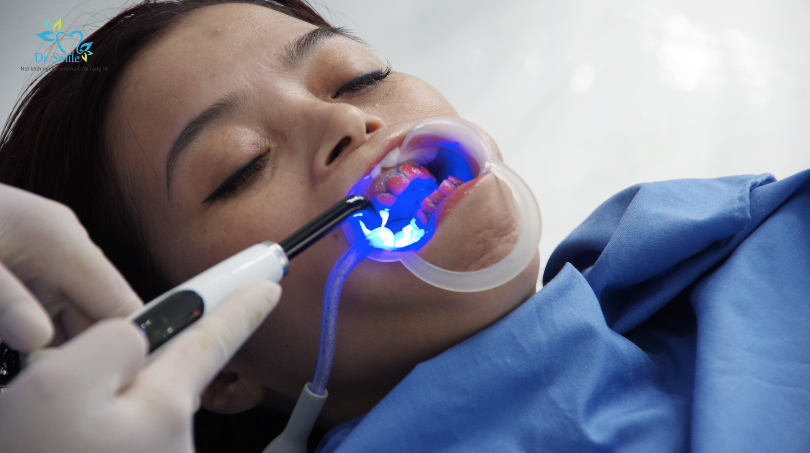
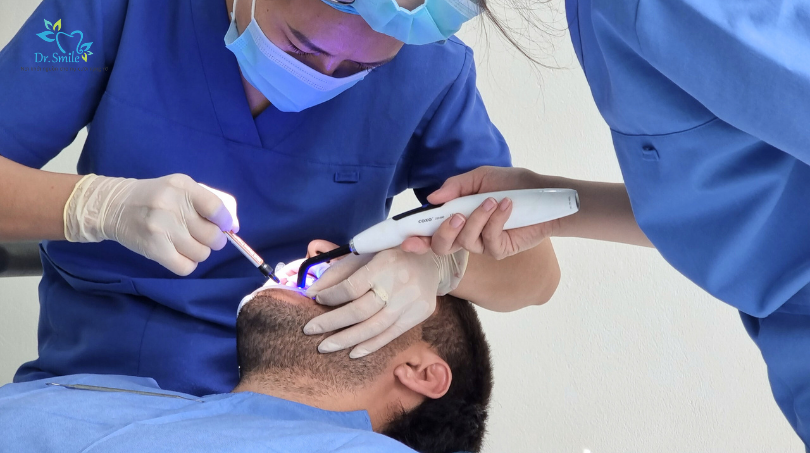
If you wish to improve your tooth color and achieve a naturally brighter smile, professional teeth whitening at Dr.Smile in Hanoi is worth considering. Using the Bleach Bright whitening system, which combines specialized whitening gel with blue LED light, the clinic aims to improve yellow and stained teeth through a controlled treatment process.
According to Dr.Smile’s service information, Bleach Bright technology can brighten teeth by approximately 2–3 shades after the first session, with a treatment duration of around 45–60 minutes. However, actual teeth whitening before and after results depend on the initial tooth shade, the cause of discoloration and each patient’s response to treatment.
The in-office whitening process includes an initial examination and shade assessment, professional cleaning when necessary, gum protection, whitening treatment and post-treatment evaluation. Dentists also provide aftercare instructions to help maintain tooth color and reduce the risk of recurrent discoloration.
Some patients may experience temporary tooth sensitivity or mild gum irritation during whitening. Therefore, selecting an appropriate gel concentration, controlling exposure time and monitoring tooth responses are essential for treatment safety.
For optimal aesthetic results, patients should undergo a dental examination before treatment. Dr.Smile evaluates each patient’s oral health and recommends a suitable whitening approach based on their needs and natural tooth characteristics.
Understanding teeth whitening before and after results helps you set realistic expectations for a brighter smile. Although whitening effectiveness varies depending on tooth condition and the cause of discoloration, professional treatment can significantly improve dental aesthetics. Contact Dr.Smile today to discover the right teeth whitening solution for your smile!
DR.SMILE DENTAL CLINIC
Address: No. 41 Nui Truc Street, Giang Vo Ward, Hanoi City, Vietnam
Hotline: 0966692286
Email: drsmile.vn@gmail.com
Facebook: facebook.com/www.Dr.Smile
Website: drsmiledentalcare.com
Instagram: instagram.com/drsmilevn